

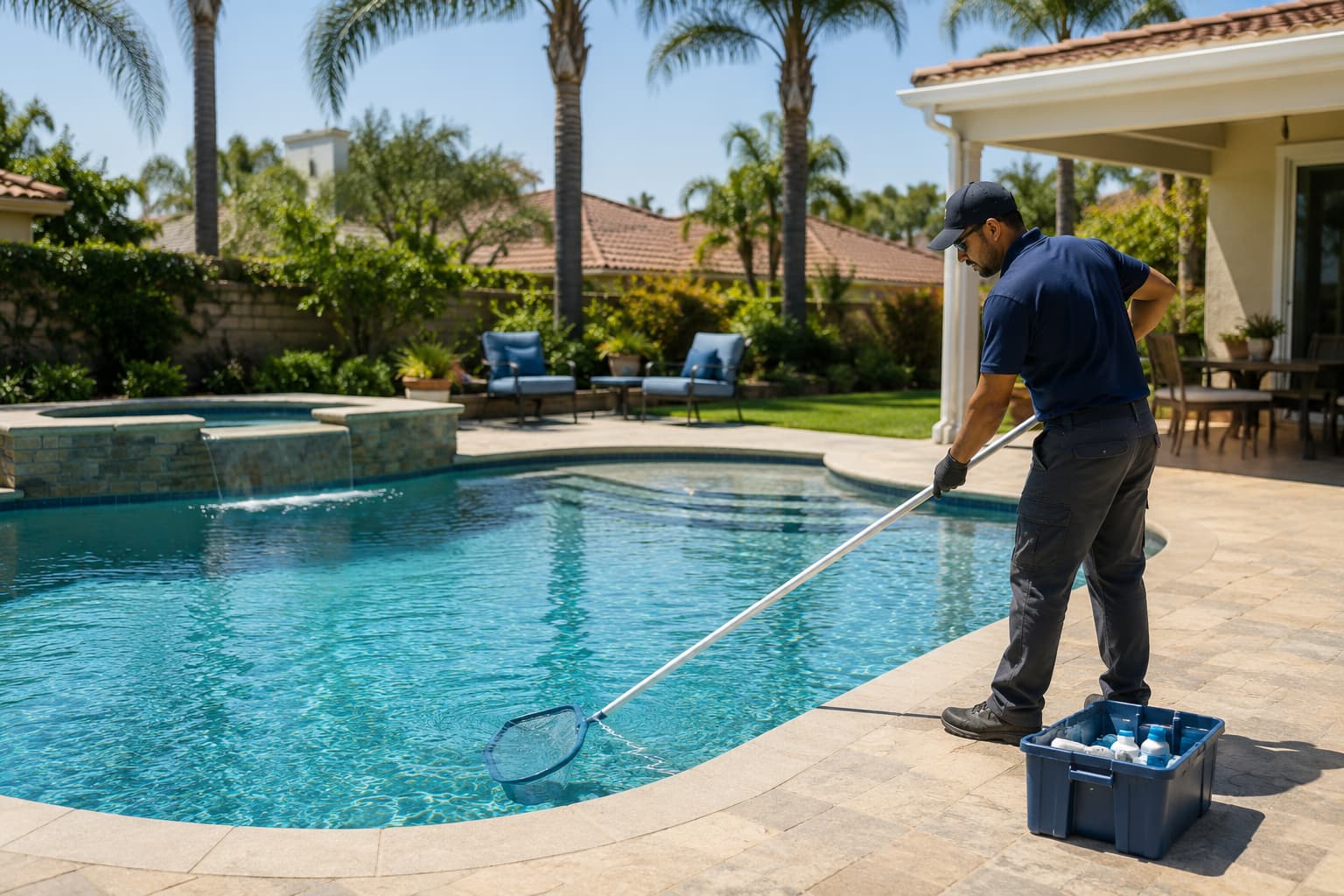
Apartment and condo pools in Clairemont Mesa need far more than a quick weekly skim, because a shared pool used by dozens of residents faces heavier chemical demand, stricter health code rules, and real liability exposure that a private backyard pool never deals with. Clairemont Mesa is packed with multi-family properties, and every shared pool comes with a property manager who is responsible for keeping it clean, compliant, and safe. A basic cleaning service that works fine for a single-family home leaves those responsibilities half-covered. This guide explains why shared pools are a different job entirely, what California expects from multi-family facilities, and what property managers should look for in a real commercial pool service.
Why Shared Pools Need Far More Chemical Attention Than Private Pools
A backyard pool might see a handful of swimmers a week. An apartment pool in Clairemont Mesa can see dozens of people in a single hot afternoon, with kids, sunscreen, and constant use from morning until night. Every one of those swimmers adds to the load on the water, and shared pools burn through their chemical balance far faster than a private pool ever would.
That heavier use means the water has to be tested and adjusted much more often to stay safe and clear. A once-a-week skim and a splash of chemicals cannot keep up with that kind of demand. Shared pools need consistent, knowledgeable attention to stay balanced, especially through Clairemont Mesa’s long, hot summers where heat speeds everything up.
On top of the bather load, this area deals with mineral-heavy water that concentrates fast, a problem we break down in Hard Water Stains in Clairemont Mesa Pools: Causes, Warning Signs, and Solutions. For a busy apartment pool, those two pressures stack on top of each other.
Liability Exposure for Clairemont Mesa Property Managers
For a property manager, a shared pool is not just an amenity. It is a responsibility with real legal weight. An unmaintained or unsafe pool is one of the bigger liability risks on a multi-family property, and the consequences of getting it wrong go well beyond a bad online review.
Poorly maintained shared pools can expose managers and owners to:
- Health complaints or illness tied to unbalanced or unsanitary water.
- Safety incidents when equipment, barriers, or drains are not properly maintained.
- Code violations and penalties from failed inspections.
- Resident dissatisfaction, complaints, and turnover when the pool is regularly closed or cloudy.
Warning: do not treat a shared pool like a private one just to save on service. The gap between a homeowner’s casual cleaning and a properly managed commercial pool is exactly where liability lives. Professional, documented maintenance is one of the simplest ways to protect yourself and the property.
California Health Code Requirements for Multi-Family Pool Facilities
Public and semi-public pools, which include apartment, condo, and HOA pools, fall under health and safety rules that private backyard pools do not. These rules exist to protect residents, and they are enforced through county inspections.
At a high level, multi-family pool facilities are generally expected to maintain:
- Properly balanced, sanitized water at all times, not just after a weekly visit.
- Safe, compliant barriers, fencing, and self-latching gates around the pool area.
- Anti-entrapment drain covers and functioning safety equipment.
- Clear posted signage covering rules, capacity, and safety information.
- Records that show the pool is being maintained consistently.
The exact requirements can change and vary by facility, so property managers should confirm current specifics with San Diego County. The takeaway is that a shared pool is held to a real standard, and a service that only shows up to skim leaves you exposed at inspection time. Managed HOA properties face their own layer of rules too, which we cover in Why HOA Pools in Chula Vista Have Different Maintenance Rules.
What a Commercial Pool Service Contract Covers vs Basic Cleaning
This is where the difference becomes clear. Basic cleaning and a real commercial service are two very different things, and for a Clairemont Mesa apartment pool, the gap matters.
| Basic weekly cleaning | Commercial pool service |
| Skim, empty baskets, quick brush | Full cleaning plus detailed water testing and balancing |
| Occasional chemical top-off | Chemistry managed for heavy, changing bather load |
| Little to no record keeping | Documented service records for compliance |
| No equipment monitoring | Equipment checks and early problem spotting |
| No compliance awareness | Service aligned with health code expectations |
| Homeowner-style scheduling | Frequency matched to a high-use shared pool |
A true commercial contract is built around the reality of a shared pool: heavy use, compliance, and accountability. That is a different service than Pool Cleaning San Diego for a private home, even though the fundamentals of clean water are the same. If you manage property in this area, our Spa cleaning, Maintenance & Repair in Clairemont Mesa page shows how local service is structured for shared facilities.
How High Bather Load Affects Water Balance in Shared Pools
Bather load is simply the number of people using a pool, and it has a direct, fast effect on water chemistry. Every swimmer introduces sweat, sunscreen, lotions, and other contaminants that eat away at sanitizer and shift the water balance.
In a busy Clairemont Mesa apartment pool, high bather load means:
- Sanitizer gets used up quickly, so the water can become under-protected between visits.
- Water balance drifts faster, which affects clarity and comfort for residents.
- Clarity suffers, and a cloudy pool is both a safety concern and a complaint magnet.
- Problems can appear within days, not weeks, especially on hot, busy weekends.
This is the core reason a shared pool needs more frequent, more attentive service than a private one. The water simply cannot hold its balance as long when it is being used this heavily. Keeping residents safe, especially kids, is part of the job, and our Is Your Crown Point Pool Safe for Kids? A Parent’s Pre-Summer Checklist is a useful reference for shared, family-heavy pools.
Questions Property Managers Should Ask Before Hiring a Pool Company
Not every pool company is equipped to handle a commercial, multi-family pool. Before you sign a contract for a Clairemont Mesa apartment or condo pool, these questions will separate a real commercial provider from a residential cleaner.
- Do you service commercial and multi-family pools? Shared pools have different demands than backyard pools, and experience matters.
- How do you handle compliance and record keeping? You want documented service you can show at inspection time.
- How often will you actually visit? A high-use pool often needs more than once-a-week attention.
- Are you licensed and insured for commercial work? This protects both you and the property.
- Do you monitor equipment, not just clean the water? Catching equipment issues early prevents costly closures.
- How do you manage heavy bather load and local water conditions? A good answer shows they understand shared pools and Clairemont Mesa water.
The right answers point to a company that treats your pool as the commercial responsibility it is, not a side job squeezed between residential routes.
Protect Your Clairemont Mesa Property With the Right Pool Service
If you manage an apartment, condo, or small HOA pool in Clairemont Mesa, basic weekly cleaning leaves you exposed to compliance, liability, and resident safety. C2C Pools provides commercial pool service built for high-use shared facilities, with the water management, equipment monitoring, and documentation a multi-family property needs. Reach out to talk through a service plan that keeps your pool compliant, clear, and safe for your residents year-round.
Frequently Asked Questions
How often should an apartment pool be serviced?
Shared apartment pools usually need more frequent service than private pools, often multiple visits a week during busy periods, because heavy resident use burns through sanitizer and shifts water balance fast.
Are apartment pools held to different rules than home pools?
Yes. Apartment, condo, and HOA pools are semi-public facilities subject to California health and safety rules and county inspections that private backyard pools do not have to meet.
What is a property manager liable for with a shared pool?
Managers can face liability for unsafe or unsanitary water, safety incidents, and code violations. Consistent, documented professional maintenance is one of the best ways to reduce that exposure.
What does commercial pool service include that basic cleaning does not?
Commercial service adds detailed water testing, chemistry managed for heavy use, equipment monitoring, compliance-focused record keeping, and a visit frequency matched to a high-use shared pool.
Why does a shared pool get cloudy so fast?
High bather load introduces contaminants that use up sanitizer and unbalance the water quickly. Without frequent professional attention, clarity drops within days, especially on hot, busy weekends.
