

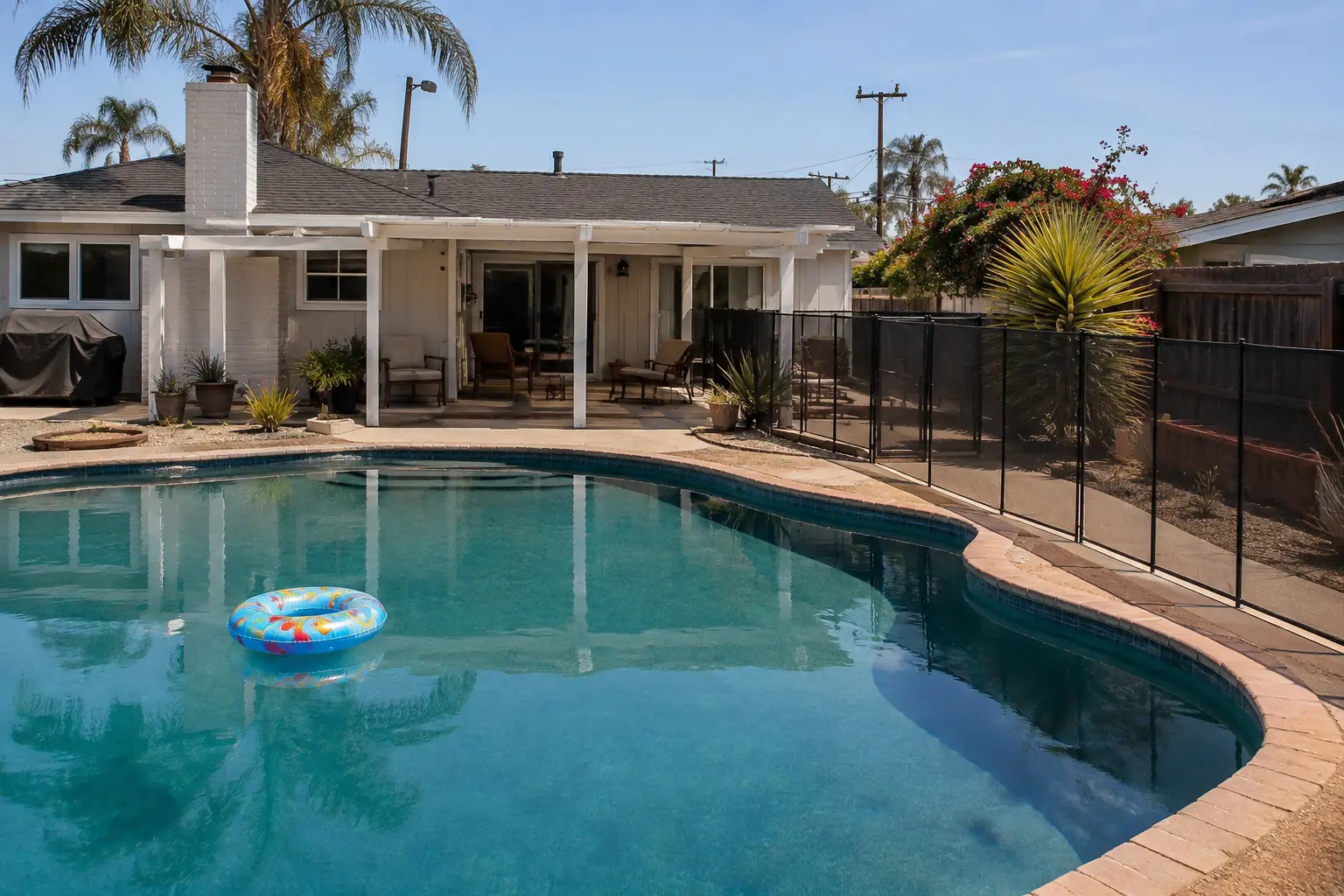
Before summer swimming starts, every Crown Point parent should check three things: that the pool has a compliant barrier and self-latching gate, that the drains have modern anti-entrapment covers, and that chemicals are locked safely away from kids. Crown Point is full of young families, and a backyard pool is one of the best parts of summer here, but it is also the single biggest safety risk in the yard. California law sets clear rules for residential pools, and older pools especially can have hidden hazards that most homeowners never think about. This checklist walks you through what to inspect before the season, what the law requires, and how a professional inspection catches the problems you cannot see.
California Pool Safety Laws Every San Diego Homeowner Must Follow
California takes residential pool safety seriously, and for good reason. Drowning is one of the leading causes of accidental death for young children, and layered safety features are proven to reduce that risk. The state’s Swimming Pool Safety Act, strengthened by SB 442, sets the baseline every San Diego homeowner should know.
In short, a residential pool needs a proper barrier plus additional drowning-prevention features. Any residential pool or spa more than about a foot and a half deep is covered, and homes that build or remodel a pool are required to include at least two of seven approved safety features on top of the barrier.
The seven approved drowning-prevention features include options like:
- An enclosure or barrier that isolates the pool from the house and yard.
- A safety pool cover that meets the required standard.
- Exit alarms on doors and windows that open toward the pool.
- Self-closing, self-latching doors and gates with the latch placed out of a child’s reach.
- Approved pool and water-entry alarms.
- Removable mesh fencing that meets the required standard.
Rules can change and details vary, so confirm the current requirements with San Diego County before you rely on any single feature. The point is simple: one barrier is not the whole picture, and layered protection is what keeps kids safe.
Pool Barrier and Fence Requirements for San Diego Backyards
The fence is your first and most important line of defense, and California is stricter than the national standard. A residential pool barrier generally needs to be tall enough that a child cannot climb or reach over it, with no gaps a small child could squeeze through, and gates that close and latch on their own.
A safe backyard barrier should have:
- A tall enclosure, taller than the old national minimum, measured from the ground up.
- No footholds or handholds a child could use to climb it.
- Gaps small enough that a child cannot slip through the pickets or under the fence.
- A self-closing, self-latching gate that swings away from the water, with the latch mounted high.
A gate that does not latch on its own is one of the most common and dangerous failures parents overlook. If you have to remember to close it, it will eventually be left open. Test that your gate closes and latches every single time, on its own, before summer.
Common Pool Safety Hazards Found During Crown Point Inspections
When professionals inspect Crown Point pools, the same problems come up again and again, and many of them are invisible to a homeowner going about their normal routine.
The hazards that show up most often include:
- Gates that no longer self-latch, or latches mounted low enough for a child to reach.
- Old or missing anti-entrapment drain covers, a serious and often hidden risk.
- Damaged or gappy fencing that has shifted or weakened over time.
- Slippery decking, loose coping, or trip hazards around the pool edge.
- Improperly stored chemicals within reach of children or pets.
- Cloudy water that hides the pool floor, which is both a safety and a chemistry problem.
That last one matters more than people realize. If you cannot see the bottom of the pool, you cannot see a child in trouble. Keeping the water clear is a safety issue as much as a cosmetic one, which is one reason steady Crown Point Pool Cleaning Services matter for families. If your water ever turns on you fast, our guide How Do I Stop My Pool from Going Green Overnight? can help.
Anti-Entrapment Drain Covers: What They Are and Why Older Pools May Lack Them
This is the hazard almost no parent thinks about, and it is one of the most important. A pool drain creates suction, and an old, flat, or broken drain cover can trap a child underwater through hair, clothing, or body contact. It is a rare but devastating risk, and it is exactly why modern safety standards exist.
Newer pools are built with anti-entrapment drain covers designed to prevent this. The problem is that many older Crown Point pools were built before these standards, or have covers that have cracked, faded, or been replaced incorrectly over the years.
A tip from experience: you cannot always tell a compliant drain cover from an unsafe one just by looking. This is one of the clearest cases where a professional set of eyes is worth it. If your pool is more than a couple of decades old and you are not sure about the drains, have them checked before kids are in the water.
Chemical Storage Safety for Households With Kids and Pets
Pool chemicals keep your water safe, but stored carelessly they are a real hazard for curious kids and pets. Every summer, families end up in urgent care over chemicals that were left within reach. A few simple habits prevent almost all of it.
Keep your household safe by making sure you:
☐ Store all pool chemicals in a locked cabinet or space kids and pets cannot reach.
☐ Keep chemicals in their original, labeled containers, never in food or drink containers.
☐ Store different chemicals separately, since some react dangerously when mixed.
☐ Keep the storage area cool, dry, and out of direct sun.
☐ Handle and add chemicals when children are not underfoot, and clean up spills right away.
If handling chemicals safely feels like one more thing on an already full plate, this is a big part of why many families hand water care to a professional. Letting a pro manage the chemistry keeps the most dangerous products out of your home entirely.
How a Professional Pool Inspection Uncovers Hidden Safety Issues
You can handle a lot of this checklist yourself, and you should. But some hazards are genuinely hard to spot without experience, and a professional inspection is built to find exactly those.
A professional inspection typically checks:
- Barriers and gates, confirming they meet current standards and actually work as intended.
- Drain covers and suction fittings for entrapment risk.
- Equipment, wiring, and fittings for safety and wear.
- Water clarity and balance, since unsafe water is a hazard too.
- Decking, surfaces, and the pool area for trip and slip risks.
The value is peace of mind. Going into summer knowing a trained eye has checked your pool means you can relax and let the kids enjoy it. It also pairs naturally with understanding your local water, which our guide How Mission Bay’s Coastal Climate Changes Pool Care in Crown Point explains for Crown Point pools. And if you help manage a shared or community pool, the safety bar is even higher, as we cover in Why Clairemont Mesa Apartment Pools Need More Than Basic Weekly Cleaning.
Get Your Crown Point Pool Summer-Ready and Safe
If you have kids or grandkids swimming in Crown Point this summer, a little preparation now prevents the worst kind of accident. C2C Pools helps local families check barriers, drains, and water safety, and keeps pools clean and clear so you can always see the bottom. Reach out for a professional look before the season, and head into summer knowing your pool is ready for the people who matter most.
Frequently Asked Questions
What are California’s pool fence requirements?
California requires a residential pool barrier tall enough that children cannot climb or reach over, with no wide gaps and a self-closing, self-latching gate, plus additional approved safety features.
How many safety features does a California pool need?
Pools built or remodeled under current law generally need a barrier plus at least two of seven approved drowning-prevention features, such as alarms, safety covers, or self-latching gates. Confirm specifics locally.
What is an anti-entrapment drain cover?
It is a specially designed drain cover that prevents suction from trapping a child underwater. Older pools may lack compliant covers, so have them checked before kids swim.
How should I store pool chemicals with kids at home?
Keep chemicals locked away, in original labeled containers, stored separately, cool and dry, and handle them when children are not around. Cleaning up spills right away prevents most accidents.
Do I need a professional pool inspection for safety?
It is highly worthwhile. Some hazards, like faulty drain covers or gates that no longer latch, are hard to spot without experience, and an inspection catches them before summer.
